Blue-Green Algae
-
Alarmingly, Lac Notre-Dame and other area lakes have had some recent blue-green algae (also called cyanobacteria) sightings. Some of this type of algae is dangerous for swimming, washing and drinking.
-
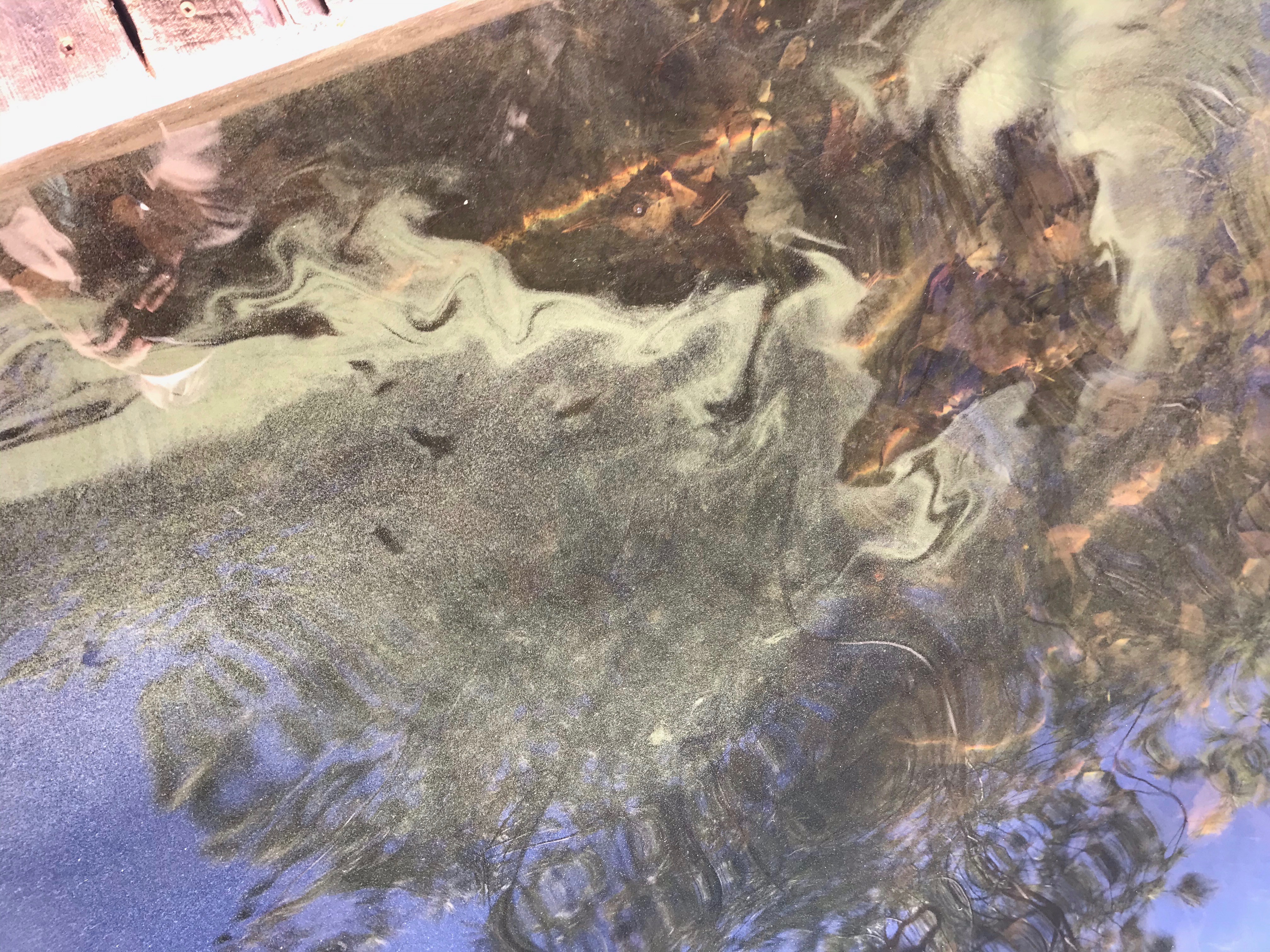
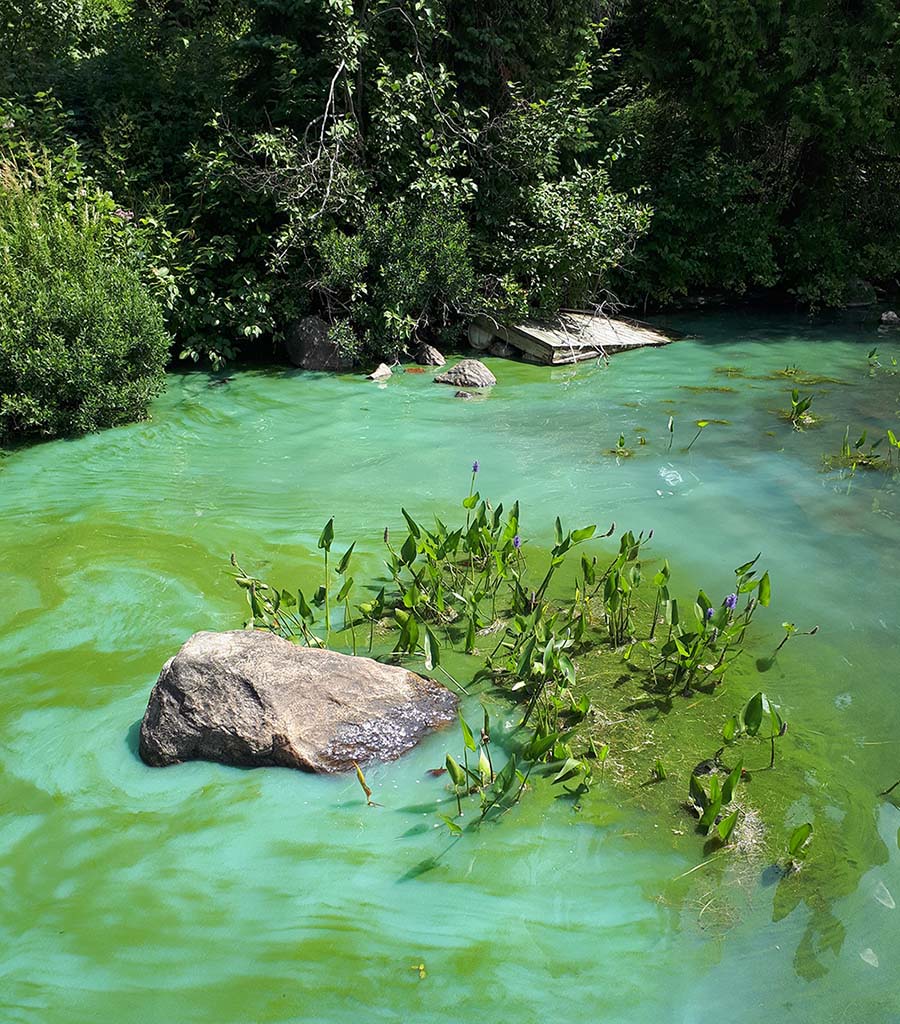
Dense blue-green algae blooms can look like green pea soup or solid-looking mats of turquoise paint. Blooms can also be other colours such as yellow, purple, red or brown.
-
Blue-green algae can grow into substantial blooms that consume large amounts of oxygen in the water when they die and decompose, placing fish at risk too.
-
Fresh blooms smell like freshly mowed grass but older blooms can smell like rotting garbage.
Blue-green algae can be poisonous
-
Not all types of blue-green algae make us sick, but some produce toxins that can cause diarrhea, vomiting, skin irritation and headaches.
-
Imagine coming to the lake but being unable to swim, fish or otherwise enjoy the water. Thankfully, we are not there yet but we need to do all we can to avoid this future.
Prevent blue-green algae in our lakes
-
Blue-green algae (and other species of algae) grow in the presence of nutrients like nitrogen and phosphorous. Sources of these nutrients include leaking septic systems, lawn fertilizers, and animal waste, among others. Runoff from rainfall magnifies the harmful impact of these sources.
-
You can make a difference in our fight for a healthy lake:
- Avoid using lawn fertilizers on your property, especially if natural plants and shrubs have been removed from your shoreline.
- Leave at least 5 metres near the shore unmowed.
- Plant native species on your shoreline to absorb and filter nutrients before they are washed into the lake by rain.
- Keep your septic system in good repair, and pump out as needed, or at minimum every 2 years for permanent residents and every 4 years for seasonal residents, per Québec rules.
- Reduce the wake produced by your boat.
- Learn more about blue-green algae in this great article by Watersheds Canada